THE HUMAN FACULTY · PROFILE AVAILABLE
Frederick Douglass
Abolitionist, orator, author, and public advocate
c. 1818–1895
The Architecture of Freedom
Explore Legacy Teachings Research & Sources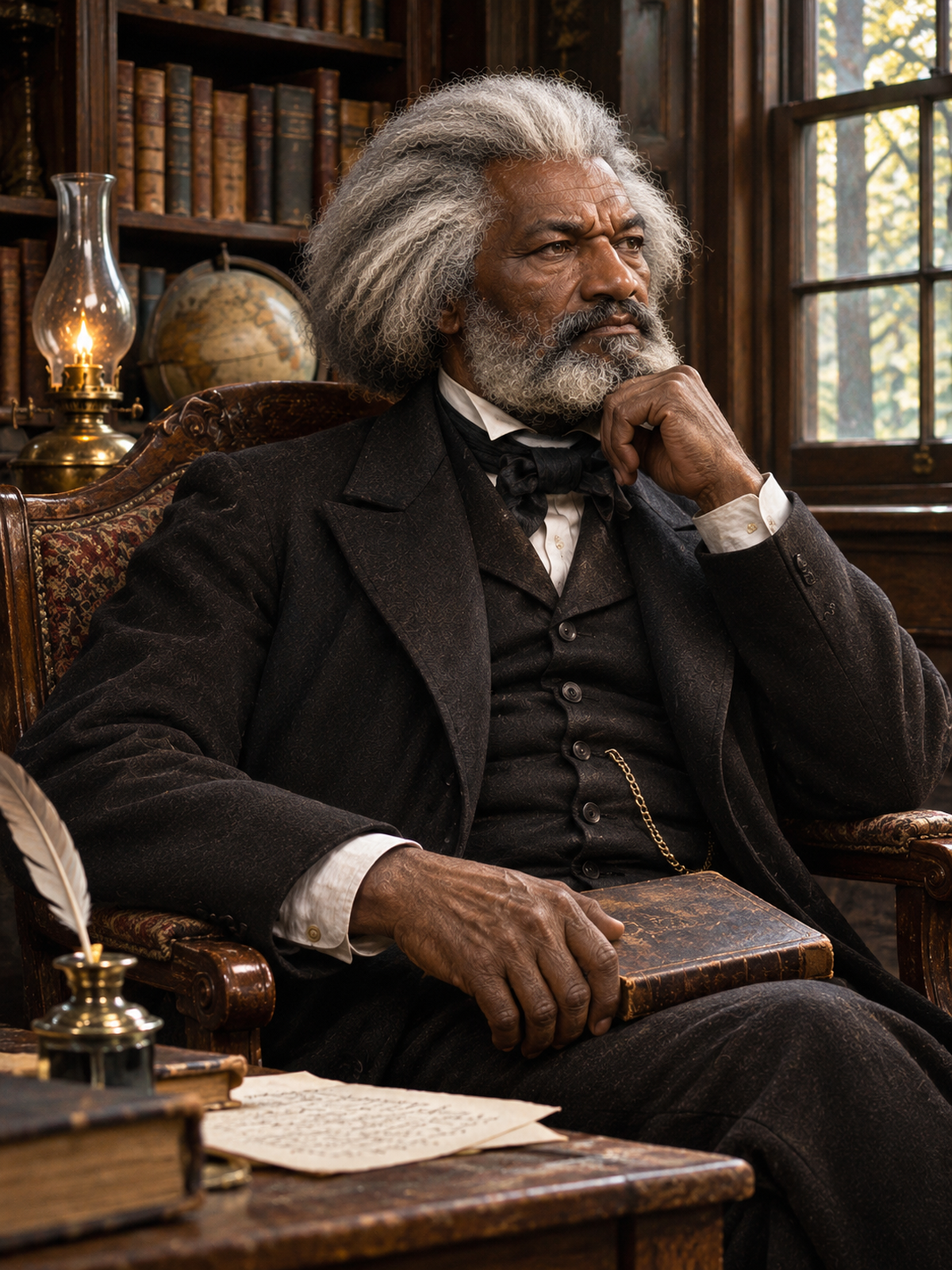
01 / THE TEACHER
The Teacher
& His Legacy
An abolitionist, orator, and author who escaped slavery and used autobiography and public advocacy to challenge oppression and argue for equal rights.
Meet Frederick Douglass02 / THE APPROACH
How These Teachings
Were Developed
Freedom begins with independent thought, develops through courage to act, and becomes durable through institutions that defend others’ dignity.
This proposed curriculum is organized from the supplied blueprint. Its sources are preliminary anchors, not passage-verified citations. Historical claims, links, rights, and publication require editorial review.
03 / ENDURING IDEAS
What Frederick Douglass Can Teach Us
Self-Education and Intellectual Freedom
Literacy, curiosity, independent thought and knowledge as agency.
Personal Agency, Resilience, and Self-Transformation
Resistance, boundaries, fear, identity and structural constraints.
Persuasion, Public Speaking, and Communication
Testimony, rhetorical structure, irony, audience and credibility.
Moral Courage and Ethical Leadership
Conscience, law versus justice, strategic compromise and accountability.
Media Literacy, Narrative, and Control of Information
Publishing, propaganda, verification and information power.
Citizenship, Democracy, and Institutional Change
Rights, voting, constitutional interpretation and Reconstruction.
Equality, Human Dignity, and Universal Rights
Racial equality, women’s rights and moral consistency.
Strategic Thinking, Coalition-Building, and Negotiation
Allies, tactics, compromise and adaptation.
Freedom, Responsibility, and Human Nature
Autonomy, practical opportunity and defense of others’ liberty.
Identity, Memory, and Personal Reinvention
Autobiographical evolution, self-authorship and legacy.